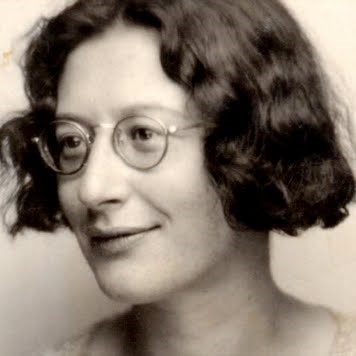
西蒙‧韋伊 (Simone Weil,1909–1943)
重力與恩典 Gravity and Grace
【重力與恩典】
創世,源於重力的下沉運動、恩典的上升運動、以及源於次等恩典的下沉運動。
自行降低高度,是在心靈的重力中上升。心靈的重力,使我們朝上降落。
【GRAVITY AND GRACE】
Creation is composed of the descending movement of gravity, the ascending movement of grace and the descending movement of the second degree of grace. To lower oneself is to rise in the domain of moral gravity. Moral gravity makes us fall towards the heights.
【接受虛空】
不去使用自己擁有的全部力量,便是容忍虛空。虛空使恩典降臨。
我們藉解除他人的債務(指的是他人對我們造的惡,及我們對他人行的善)來接受自己內在的虛空。
熱愛真理,意味忍受虛空,並進一步接受死亡。真理站在死亡那邊。
【ТО ACCEPT THE VOID】
Not to exercise all the power at one's disposal is to endure the void. It is this vacuum which makes it (grace) come.
It is the same with the remission of debts (the harm which others have done us, the good which we have done them). There again, we accept a void in ourselves.
To love truth means to endure the void and, as a result, to accept death. Truth is on the side of death.
【超然】
善對我們純屬虛無,因為沒有任何事物是善的。但虛無並不代表不真實。與這虛無相較之下,世上所有存在之事,都是不真實的。
填補虛空的信仰,是舒緩苦悶的糖蜜,應予以排除。
【DETACHMENT】
The good seems to us as a nothingness, since there is no thing that is good. But this nothingness is not unreal. Compared with it, everything in existence is unreal.
We must leave on one side the beliefs which fill up voids and sweeten what is bitter.
【填補虛空的想像力】
所有不被接受的虛空,都會導致恨意、尖刻、傷悲、仇恨。期望深恨之人受苦。
【IMAGINATION WHICH FILLS THE VOID】
Every void (not accepted) produces hatred, sourness, bitterness, spite. The evil we wish for that which we hate.
【棄絕時光】
過去與將來,為不斷攀升的想像力提供了無限的空間,因此阻礙了苦難的益處。因為如此,對於過往與將來的棄絕,是所有放棄行動當中的首要之務。
【RENUNCIATION OF TIME】
The past and the future hinder the wholesome effect of affliction by providing an unlimited field for imaginary elevation. That is why the renunciation of past and future is the first of all renunciations.
【沒有對象的渴求】
存在眼前的死者是想像的,而他不在場的事實是真的;從今而後,不在場便是他的顯現方式。
久違重逢的友人和我握手。我甚至沒注意到,這觸感是喜悅抑或痛苦。像一名使用拐杖末端感受物件的盲人一樣,我直接感受到的,是這位友人的在場。人生所有際遇,皆是如此。神亦是如此。
【TO DESIRE WITHOUT AN OBJECT】
The presence of the dead person is imaginary, but his absence is very real: henceforward it is his way of appearing.
The handshake of a friend on meeting again after a long absence. I do not even notice whether it gives pleasure or pain to my sense of touch: like the blind man who feels the objects directly at the end of his stick, I feel the presence of my friend directly. It is the same with life's circumstances, whatever they may be, and God.
【自我】
自我當中,所有珍貴之處皆來自於我之外,毫無例外。這珍貴之處並非賞賜,而是暫借之物,需要時時更新。
自我當中,所有一切都毫無價值,沒有例外。
自我當中,來自於我之外的恩賜,若我占為已有,便立即失去價值。
【THE SELF】
Everything without exception which is of value in me comes from somewhere other than myself, not as a gift but as a loan which must be ceaselessly renewed.
Everything without exception which is in me is absolutely valueless;
and, among the gifts which have come to me from elsewhere, everything which I appropriate becomes valueless immediately I do so.
【解除創造】
我們的存在,奠基於神在等待我們對於不存在的同意。祂將這份存在賜予我們,是為了向我們乞求它。
必然是我們與神之間的屏障,有了這屏障,我們方能存在。我們的任務是戳破屏障,好讓自己停止存在。
Our existence is made up only of his waiting for our acceptance not to exist. He is perpetually begging from us that existence which he gives. He gives it to us in order to beg it from us.
Necessity is the screen set between God and us so that we can be. It is for us to pierce through the screen so that we cease to be.
【抹消】
神將存在賜予給我,好讓我將之返還於祂。這場試煉,如同童話和啟蒙故事當中宛如陷阱的試煉。若我接受祂的贈與,那便是有害的、致命的;唯有拒絕這項贈與,品德才會顯現。神允許我存在於祂之外。我應做的,是拒絕這項應允。
自我只是一道陰影,是罪惡與過錯遮擋神之光芒而投下的影子,而我卻誤以為它真實存在。
God gave me being in order that I should give it back to him. It is like one of those traps whereby the characters are tested in fairy stories and tales on initiation. If I accept this gift it is bad and fatal; its virtue becomes apparent through my refusal of it. God allows me to exist outside himself. It is for me to refuse this authorization.
The self is only the shadow which sin and error cast by stopping the light of God, and I take this shadow for a being.
【必然與臣服】
不應為了某個目標而行動。應該基於必然性而行動。我只能這樣做。這不是行動,而是被動。不行動的行動。
無論何種行動,皆不應以目標取向看待,而應由驅動力的角度來看待。不應該問:目的何在?而應該問:它從何處來?
「我赤身裸體時,你們為我穿上衣服。」這份餽贈,只是彰顯這樣行事的人們的處境。他們的處境不容許他們制止自己提供食物給飢餓者、提供衣物給裸身者;他們這樣做,絲毫不是為了基督,而是因為基督的悲憫在他們心中,所以他們無法制止自己不這樣做。
不可為了基督而去援助他人。應藉由基督去援救。應使自我消失,讓基督藉由我們身心構成的中介,去進行援助的行動。
【NECESSITY AND OBEDIENCE】
To act not for an object but from necessity. I cannot do otherwise. It is not an action but a sort of passivity. Inactive action.
Every act should be considered from the point of view not of its object but of its impulsion. The question is not What is the aim?' It is 'What is the origin?'
'I was naked, and ye clothed me.' This gift is simply an indication of the state of those who acted in this way. They were in a state which made it impossible for them not to feed the hungry and to clothe the naked; they did not in any way do it for Christ, they could not help doing it because the compassion of Christ was in them.
We must not help our neighbour for Christ but in Christ. May the self disappear in such a way that Christ can help our neighbour through the medium of our soul and body.
【幻覺】
世間事物之幻覺,並非關於事物的存在,而是關於事物之價值。
確切而言,時間並不存在(除非是有限的當下)。然而,我們卻屈從於時間。這便是我們的處境。我們屈從於不存在之物。無論這時間是被動的受苦時間(身體疼痛、等候、悔恨、內疚、恐懼)抑或主動支配的時間(有秩序、有條理、基於必然),在這兩種情況之下,我們屈從的對象都不存在。但我們的屈從行為是確實存在的。非真實的鎖鏈,真實地捆縛了我們。非真實的時間,使得所有事物以及我們都籠罩一層非真實性。
我們並非因為肉身而遠離神,肉身僅是我們用以掩蓋自己的屏幕,它是神和我們之間的屏障。
【ILLUSIONS】
Illusions about the things of this world do not concern their existence but their value.
Strictly speaking time does not exist (except within the limit of the present), yet we have to submit to it. Such is our condition. We are subject to that which does not exist. Whether it is a question of passively borne duration — physical pain, waiting, regret, remorse, fear — or of organized time — order, method, necessity — in both cases that to which we are subject does not exist. But our submission exists. We are really bound by unreal chains. Time which is unreal casts over all things including ourselves a veil of unreality.
It is not the flesh which keeps us away from God; the flesh is the veil we place before us to shield us from him.
【偶像崇拜】
我們無須學習謙卑。我們心中已有謙卑。不過,在虛假的神面前,我們卑躬屈膝、羞辱了自己。
【IDOLATRY】
We do not have to acquire humility. There is humility in us— only we humiliate ourselves before false gods.
【愛】
並非因為神愛我們,所以我們就必須愛神。反之,因為神愛我們,所以我們應該愛自己。若非基於這個動機,如何能愛自己呢?除非藉由這樣迂迴的拐彎,否則人不可能自愛。
當喜樂與痛苦都引發相等的感激之情,對神的愛便是純粹的。
對幸福之人而言,愛,是希望分擔所愛之人的不幸與痛苦。
對不幸之人而言,愛,是僅只因為知道所愛之人快樂,便感到滿足。儘管自己並不參與這份快樂,也不渴求參與其中。
【LOVE】
God's love for us is not the reason for which we should love him. God's love for us is the reason for us to love ourselves. How could we love ourselves without this motive? It is impossible for man to love himself except in this roundabout way.
Love of God is pure when joy and suffering inspire an equal degree of gratitude.
Love on the part of someone who is happy is the wish to share the suffering of the beloved who is unhappy.
Love on the part of someone who is unhappy is to be filled with joy by the mere knowledge that his beloved is happy without sharing in this happiness or even wishing to do so.
【惡】
想像的惡,是浪漫的、多樣化的;真實的惡,則是陰鬱、單調、宛如沙漠、乏味無聊。
想像的善,是很無聊的;真實的善則永遠嶄新,既美好又讓人心醉神馳。
惡所進犯的,並不是善,因為善是不容進犯的;能夠進犯的善,是早已沉淪的善。
虛假的神,將痛苦變成暴力。真正的神,則將暴力變成痛苦。
必須將自己心中的惡,由自己心中不純淨的區域,轉至自己心中純淨的區域。如此,便能將惡轉化為純粹的痛苦。我們內在的罪,只能對自己犯罪。
【EVIL】
Imaginary evil is romantic and varied; real evil is gloomy, monotonous, barren, boring.
Imaginary good is boring; real good is always new, marvellous, intoxicating.
It is not good which evil violates, for good is inviolate: only a degraded good can be violated.
The false God changes suffering into violence. The true God changes violence into suffering.
We have to transfer it (evil) from the impure part to the pure part of ourselves, thus changing it into pure suffering. The crime which is latent in us we must inflict on ourselves.
【不幸】
人類高於神的一點,是人有痛苦。神必須降生為人,才得以緩解這道差異。
不逃避痛苦,亦不尋求減輕痛苦,而是努力不讓痛苦改變自我。
基督教的偉大之處,在於它不尋求治癒痛苦的超自然療法,而是尋求痛苦本身的超自然用途。
我們認為不可能之事,不幸強迫我們承認它是真的。
兩種想法能減輕不幸導致的痛苦。一是認為不幸即將立刻停止、二是認為不幸永遠不會結束。前者是不可能的,後者是必然的。
我們天生傾向逃避痛苦、追求歡愉。因為如此,而且僅因如此,歡愉便成為善的形象,而痛苦成為惡的形象。天堂與地獄的圖像由此而來。然而,事實上,歡愉與痛苦,是不可分割的一體兩面。
【AFFLICTION】
Suffering: superiority of man over God. The Incarnation was necessary so that this superiority should not be scandalous.
We should seek neither to escape suffering nor to suffer less, but to remain untainted by suffering.
The extreme greatness of Christianity lies in the fact that it does not seek a supernatural remedy for suffering but a supernatural use for it.
Affliction compels us to recognize as real what we do not think possible.
Two thoughts lighten affliction a little. Either that it will stop almost immediately or that it will never stop. We can think of it as impossible or necessary, but we can never think that it simply is. That is unendurable.
By nature we fly from suffering and seek pleasure. It is for this reason alone that joy serves as an image for good and pain for evil. Hence the imagery of paradise and hell. But as a matter of fact pleasure and pain are inseparable companions.
【暴力】
維持內心對生命的熱愛不受動搖;絕不致他人於死地,除非自己接受死亡。
【VIOLENCE】
To keep the love of life intact within us; never to inflict death without accepting it for ourselves.
【十字架】
持劍者,將死於劍下。不持劍者(或放下劍者),將死於十字架上。
夏娃與亞當試圖在生命能量中尋找神性。一棵樹,一顆果實。但是,神性卻是顯現在吊掛一具遺體的幾何直角枯木之上。我們和神的親緣關係之祕密,只能在我們必死的事實中尋找。
【THE CROSS】
Whoever takes up the sword shall perish by the sword. And whoever does not take up the sword (or lets it go) shall perish on the cross.
Whoever takes up the sword shall perish by the sword. And whoever does not take up the sword (or lets it go) shall perish on the cross.
【天秤與槓桿】
十字架像天秤,也像槓桿。下降,是上升的條件。天空降至大地之後,將大地提升至天空。
十字架是一座天秤,十字架上那具身軀雖然柔弱而瘦削,卻是神的身軀,這身軀扛起了整個世界的重量。「給我一個支點,我便能舉起全世界。」(語出古希臘數學家阿基米德Archimede, 287- 212B.C.)這個支點便是十字架。其他支點並不存在。支點必須處於世俗與非世俗的交叉點。十字架便是這個交叉點。
【BALANCE AND LEVER】
The cross as a balance, as a lever. A going down, the condition of a rising up. Heaven coming down to earth raises earth to heaven.
That is why on the balance of the cross a body which was frail and light but which was God, lifted up the whole world. 'Give me a point of leverage and I will lift up the world.' This point of leverage is the cross. There can be no other. It has to be at the intersection of the world and that which is not the world. The cross is this intersection.
【不可能】
我們的生命充滿不可能性與荒謬性。我們企求的每件事物,都和它相關的條件或結果相互矛盾;我們提出的每個斷言當中,都包含與它相反的斷言;我們的所有感受,都摻雜了與其相反的感受。因為我們自身即是矛盾,我們是神的造物、是神、又絕對不是神。
【THE IMPOSSIBLE】
Our life is impossibility, absurdity. Everything we want contradicts the conditions or the consequences attached to it, every affirmation we put forward involves a contradictory affirmation, all our feelings are mixed up with their opposites. It is because we are a contradiction-being creatures-being God and infinitely other than God.
【矛盾】
惡是善的影子。凡是真實的善,都彷若固體、有其厚度,都會投下惡的影子。只有想像的善不會投下影子。
若渴求完全的至善,前提是必須接受讓自己承受最惡的惡。
基督十字架的奧義,棲身於矛盾之中,因為那既是經過同意的犧牲、亦是基督不由自主承受的刑罰。若我們在其中只看見犧牲,那我們可能會希望親身擁有相同體驗。但我們不會希望承受不由自主的刑罰。
【CONTRADICTION】
Evil is the shadow of good. All real good, possessing solidity and thickness, projects evil. Only imaginary good does not project it.
Thus the desire for utterly pure good involves the acceptance of the last degree of affliction for ourselves.
The mystery of the cross of Christ lies in a contradiction, for it is both a free-will offering and a punishment which he endured in spite of himself. If we only saw in it an offering, we might wish for a like fate. But we are unable to wish for a punishment endured in spite of ourselves.
【必然與善的距離】
必然與善的距離,便是受造之人與造物主之間的距離。
我們唯一的嚮往,是否決善惡實為一體兩面的重擔。這讓人無法容忍的重擔,亞當與夏娃早已承擔下來。
劍柄與劍尖,將持劍者與被刺者從無法忍受的重負責任當中解放出來。恩典也能完成同樣的解放,但僅只藉由責任,而非武力。
【THE DISTANCE BETWEEN THE NECESSARY AND THE GOOD】
The distance between the necessary and the good is the distance between the creature and the creator.
We aspire only to get rid of the intolerable burden of the good-evil cycle—a burden assumed by Adam and Eve.
The sword affords deliverance (whether through its handle or its point) from the intolerable weight of our obligation. Grace also delivers us from the burden but we only go towards it through obligation.
【偶然】
默想那場使我父親與母親邂逅的偶然,相較於對死亡的默想,是更有益的。
在我身上,有什麼不是源於這場邂逅?只有神。而我想著神,這思緒其實也源於那場邂逅。
【CHANCE】
Meditation on chance which led to the meeting of my father and mother is even more salutary than meditation on death. Is there a single thing in me of which the origin is not to be found in that meeting? Only God. And yet again, my thought of God had its origin in that meeting.
【應愛的對象不在場】
創世之際,神唯一能夠存在的形式,是不在場的形式。
這世界既然毫無神的存在,它因此是神自身。
若一個人將他的生命寄託於他對神的信仰,有一天他可能會喪失信仰。但是,若一個人將他的生命寄託給神本身,那他就永遠不會喪失信仰。
將生命寄託在完全無法觸及的對象上,是不可能的。此即死亡。正需如此。
因此,唯有神祕主義能為人性帶來美德。不相信世界的簾幕背後藏有無窮的慈悲、亦或相信這慈悲存在於簾幕前方,這兩種想法都會使人殘酷。
無辜者所蒙受的痛苦,其寶貴價值便由此顯現。這份痛苦近似創世之時,神作為無辜者,卻接受了惡。
「祂無視無辜者的不幸。」(約伯傳9:23)神的沉默。
【HE WHOM WE MUST LOVE IS ABSENT】
God can only be present in creation under the form of absence.
This world, in so far as it is completely empty of God, is God himself.
He who puts his life into his faith in God can loose his faith. But he who puts his life in God himself will never lose it. To put our life into that which we cannot touch in any way... It is impossible. It is a death. That is what is required.
That is why mysticism is the only source of virtue for humanity. Because when men do not believe that there is infinite mercy behind the curtain of the world, or when they think that this mercy is in front of the curtain, they become cruel.
Herein lies the pre-eminent value of the suffering of those who are innocent. It bears a resemblance to the acceptance of the evil in creation by God who is innocent.
'He will laugh at the trials of the innocent.' (Job 9:23)Silence of God.
【無神論的淨化效果】
確確實實的矛盾情形。神存在;神不存在。這有什麼問題嗎?我完完全全肯定有神存在,因為如此,我才能完全肯定我的愛並非幻覺。我完完全全肯定神不存在,因為如此,當我說出神的名字時,我才能完全肯定腦海浮現之物絲毫不像任何實際存在之物。然而,我無法設想之物,並非幻覺。
將宗教視為慰藉的來源,會阻礙真正的信仰,就這層意義來說,無神論是一種淨化。
【[ATHEISM AS A PURIFICATION】
A case of contradictories which are true. God exists: God does not exist. Where is the problem? I am quite sure that there is a God in the sense that I am quite sure my love is not illusory. I am quite sure that there is not a God in the sense that I am quite sure nothing real can be anything like what I am able to conceive when I pronounce this word. But that which I cannot conceive is not an illusion.
Religion in so far as it is a source of consolation is a hindrance to true faith: in this sense atheism is a purification.
【專注與意志】
最高層級的專注,和祈禱是相同的,都需要信仰與愛。
關於神,我們只能知曉一件事:祂是我們不是的事物。唯有我們的苦難,才是祂的形象。我們越是多加凝視自身的苦難,就越是多加凝視神。
富人與掌權者難以知曉人類之苦難,因為他們幾乎無法不去相信自己很重要。苦難之人亦難以認清苦難,因為他們幾乎無法不去相信富人與有權者很重要。
【ATTENTION AND WILL】
Attention, taken to its highest degree, is the same thing as prayer. It presupposes faith and love.
We can only know one thing about God-that he is what we are not. Our wretchedness alone is an image of this. The more we contemplate it, the more we contemplate him.
The recognition of human wretchedness is difficult for whoever is rich and powerful because he is almost invincibly led to believe that he is something. It is equally difficult for the man in miserable circumstances because he is almost invincibly led to believe that the rich and powerful man is something.
【訓練】
不應試圖抹消或改變自己內心的欲望、憎恨、愉悅與痛苦。應以被動的態度忍受它們,如同對色彩的感受一樣,並且不賦予它們更多的重要性。假設我的窗戶玻璃是紅色的,那麼日日夜夜聽從理智去觀看這房間的我,一年過後,眼中的房間不可能不是粉紅色的。我知道自己眼中的房間必然如此,那是正確的,是好的。但與此同時,我知道這顏色只是一種資訊,它對我的影響是有限的,僅限於我對它與這扇窗玻璃的關係之認識。應以這樣的方式去接受我內心產生的所有欲望、憎恨、愉悅與痛苦,而非其他方式。
我們被賦予的義務責任,是為了消滅自我。
【TRAINING】
We must not try to change within ourselves or to efface desires and aversions, pleasures and sorrows. We must submit to them passively, just as we do to the impressions we receive from colours, according no greater credit to them than in the latter case. If my window is red I cannot, though I should reason day and night for a whole year, see my room as anything but pink. I know, moreover, that it is necessary, just and right that I should see it thus. At the same time, as far as information about my room goes, I only accord to the pink colour a credit limited by my knowledge of its relation to the window. I must accept in this way and no other the desires and aversions, pleasures and sorrows of every kind which I find within me.
Duty is given us in order to kill the self.
【智性與恩典】
在智性的領域中,謙卑的美德只有一種,就是專注的能力。
最接近智性的,是真正的謙卑。真正使用智性的時候,不可能因為自己的智力而自豪。當我們使用智性時,我們並不執著於智能。因為我們知道,即使下一刻我們就變得癡傻,餘生之中,真實仍將繼續存在。
我們能看見窗玻璃上的灰塵,亦能看見窗玻璃後方的風景,但永遠看不見窗玻璃本身。擦拭玻璃上的灰塵,只能讓人看清楚風景。理性若發揮作用,只能是為了觸及真正的奧秘、觸及真正無法論證之事,也就是真實。我們無法理解之事,遮擋了所有在本質上便是不可理解之事。基於這個理由,理性應發揮作用,消弭應理解而未理解之事。
【INTELLIGENCE AND GRACE】
In the intellectual order, the virtue of humility is nothing more nor less than the power of attention.
There is nothing nearer to true humility than the intelligence. It is impossible to be proud of our intelligence at the moment when we are really exercising it. Moreover, when we do exercise it we are not attached to it, for we know that even if we became an idiot the following instant and remained so for the rest of our life, the truth would continue unchanged.
We see either the dust on the window or the view beyond the window, but never the window itself. Cleaning off the dust only serves to make the view visible. The reason should be employed only to bring us to the true mysteries, the true undemonstrables, which are reality. The uncomprehended hides the incomprehensible and should on this account be eliminated.
【讀】
我們閱讀別人,但同時我們也被他人閱讀。閱讀者相互影響。强迫他人依照你閱讀他們的方式來閱讀他們自己(奴隸制度)。強迫他人依照你閱讀自己的方式來閱讀你(征服)。
死囚懺悔之奇蹟,並非因為他想到神,而是因為他在鄰人的身上認出神。
聖女貞德。針對她高談闊論的人,幾乎必定譴責她。這些批評者並未將她視為聖女與貞女,而是以女巫、異端的名義審判她。
【READINGS】
We read, but also we are read by, others. Interferences in these readings. Forcing someone to read himself as we read him (slavery). Forcing others to read us as we read ourselves (conquest).
The miracle of the good thief was not that he thought of God, but that he recognized God in his neighbour.
Joan of Arc: those who declaim about her today would nearly all have condemned her. Moreover, her judges did not condemn the saint, the virgin, etc., but the witch, the heretic, etc.
【裘格斯戒指】
(使佩戴者隱形的魔法戒指:柏拉圖《理想國》第二卷)
將某事隔絕開來的行徑,便是隱形的裘格斯戒指。將自己與所犯的罪隔絕開來,認為二者毫無關聯。
丟棄這鑰匙、丟棄裘格斯戒指,是意志的努力,是離開洞穴、疼痛而目盲的步行。
【THE RING OF GYGES】
The ring of Gyges who has become invisible—this is precisely the act of setting aside: setting oneself aside from the crime one commits; not establishing the connexion between the two.
The act of throwing away the key, of throwing away the ring of Gyges—this is the effort proper to the will. It is the act by which, in pain and blindness, we make our way out of the cave.
【宇宙之意義】
願一個人的靈魂,以整個宇宙作為身體。
願對我而言,整個宇宙之於我的身體,一如盲人的拐杖之於他的手。他的感覺已不在他手中,而是位在拐杖尖端。
透過每一種感覺去感受宇宙。如此一來,這感覺是愉悅抑或痛苦,何關緊要?如果握住我們的手的人,是我們深愛的久別重逢之人,那麼他握太緊而使我們的手疼痛,又有什麼關係呢?
人活在世上,什麼都無法從他身上奪走的,包括:意志能夠掌控的呼吸動作,以及對於空間的感知。在這樣的呼吸或空間感知上,繫上我們無論如何都不願被剝奪的思想。
乳牛是用牠的全身來產乳,儘管我們只從牠的乳房擠奶。世界產生神聖的方式,亦復如是。
【MEANING OF THE UNIVERSE】
Let the soul of a man take the whole universe for its body.
Let the whole universe be for me, in relation to my body, what the stick of a blind man is in relation to his hand. His sensibility is really no longer in his hand but at the end of the stick.
We have to feel the universe through each sensation. What does it matter then whether it be pleasure or pain? If our hand is shaken by a beloved friend when we meet again after a long separation, what does it matter that he squeezes it hard and hurts us?
Things which nothing can take from a human being as long as he lives: in the way of movement over which his will has a hold, respiration; in the way of perception, space . We have to attach to these things the thoughts which we desire that no circumstances should be able to deprive us of.
The whole cow gives milk although the milk is only drawn from the udder. In the same way the world is the producer of saintliness.
【中介】
囚室相鄰的兩名囚犯,彼此敲打牆壁來溝通。牆分隔他們,但亦是使他們得以溝通的管道。我們與神亦是如此。所有分隔都是一種連結。
受造之物的本質,是它們的過渡特質。它們都是通往彼此的中間過渡,生生不息。它們是通往神的中間過渡。以這樣的方式去體驗它們。
欲望是壞事、是謊言,儘管如此,若無欲望,我們便不會去追尋真正的絕對、真正的無窮無盡。欲望是必經之路。
真正的俗世財產,是中介。唯有將自己擁有之物視為中介而非其他,我們才能尊重他人擁有之物。
【METAXU】
Two prisoners whose cells adjoin communicate with each other by knocking on the wall. The wall is the thing which separates them but it is also their means of communication. It is the same with us and God. Every separation is a link.
The essence of created things is to be intermediaries. They are intermediaries leading from one to the other and there is no end to this. They are intermediaries leading to God. We have to experience them as such.
Desire is evil and illusory, yet without desire we should not seek for that which is truly absolute, truly boundless. We have to have experienced it.
The true earthly blessings are metaxu. We can respect those of others only in so far as we regard those we ourselves possess as metaxu.
【美】
美誘惑肉身,藉此取得通往靈魂的許可證。
美蘊含剎那與永恆,以及其他種種對比。
美,是我們得以靜觀的事物。
美是遠距離的物質誘惑,前提是放棄,包括對於想像的放棄 — 這是最私密的棄絕。
除了美之外的欲望對象,都是我們想要吞食的對象。
美,是我們雖然渴望卻不願吞食的對象。我們只渴望它如是存在。
停留在原地不動,同時與我們雖渴望卻不願靠近的對象結合。
我們便是如此與神結合,因無法靠近神。距離,是美的核心。
【BEAUTY】
Beauty captivates the flesh in order to obtain permission to pass right to the soul.
Among other unions of contraries found in beauty there is that of the instantaneous and the eternal.
The beautiful is that which we can contemplate.
The beautiful is a carnal attraction which keeps us at a distance and implies a renunciation. This includes the renunciation of that which is most deep-seated, the imagination.
We want to eat all the other objects of desire. The beautiful is that which we desire without wishing to eat it.
We desire that it should be. We have to remain quite still and unite ourselves with that which we desire yet do not approach.
We unite ourselves to God in this way: we cannot approach him. Distance is the soul of the beautiful.
【代數】
金錢、機械化、代數。現代文明的三個怪物。完全相似。
代數與金錢的本質,是平等主義。前者是在智性方面。後者則是在實際層面。
應檢視或批判我們的文明,試著確切釐清,是怎樣的陷阱,導致人類成為自己親手創造之物的奴隸。
無意識究竟是從何處趁虛而入,進入思想與行動方法之中呢?我們必須在現今的文明生活之中,找回心靈與世界簽下的、最初的那份契約。
【ALGEBRA】
Money, mechanization, algebra. The three monsters of contemporary civilization. Complete analogy.
Algebra and money are essentially levellers, the first intel-lectually, the second effectively.
To make an inventory or criticism of our civilization—what does that mean? To try to expose in precise terms the trap which has made man the slave of his own inventions.
How has unconsciousness infiltrated itself into methodical thought and action? We have to rediscover the original pact between the spirit and the world in this very civilization of which we form a part.
【社會之和諧】
技術發展,使得文明與力量成為同一陣營,因此導致前述之再生成為不可能之事。技術發展是一種詛咒。
【SOCIAL HARMONY】
Technical development, which puts force and civilization on the same side, makes such regenerations impossible. It is accursed.