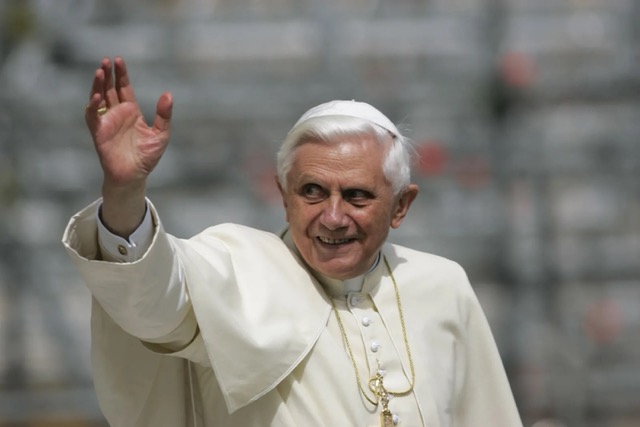
教宗本篤十六世(1927–2022):
《在真理中實踐愛德》通諭
6. 有社會就該有公義:每個社會需制訂它的一套公義制度。
愛德固然超越公義,因為愛是奉獻,把「自己的」給予別人;但愛德不能不尊重公義,
公義在於把「別人應有的」給予他,這是人因他的本性及他的作為而來的權利。除非我
把按公義該給他的先給了他,我就不能說把我自己的奉獻給他人。凡真正愛人的,一定
先會對他們公道。
公義不但不能與愛德無關,兩者也不能各行其道,公義不能與愛德分割,公義是愛德的一個固有的因素。公義是實踐愛德的第一步,或如保祿六世所說,
是「最低限度」的愛德。聖若望宗徒勸我們要「用行動和事實」實踐愛(若一 3:18),
也就是說愛德該包括公義。
從一方面來說,愛德要求公義:就是要認同並尊重個人的及
民族的所有合法權利。愛德致力建設一個有法治、有公義的「人的社會」。
從另一方面來說,愛德超越公義,並以奉獻及寬恕的道理補充公義的不足。「人的社會」不是單靠權利和義務的關係而成立,更重要及優先的條件是無條件的施予、惻隱及共融。
Pope Benedict XVI(1927–2022)
Encyclical Letter:Caritas In Veritate
6. First of all, justice. Ubi societas, ibi ius: every society draws up its own system of justice.
Charity goes beyond justice, because to love is to give, to offer what is “mine” to the other; but it never lacks justice, which prompts us to give the other what is “his”, what is due to him by reason of his being or his acting. I cannot “give” what is mine to the other, without first giving him what pertains to him in justice. If we love others with charity, then first of all we are just towards them.
Not only is justice not extraneous to charity, not only is it not an alternative or parallel path to charity: justice is inseparable from charity, and intrinsic to it. Justice is the primary way of charity or, in Paul VI's words, “the minimum measure” of it, an integral part of the love “in deed and in truth” (1 Jn 3:18), to which Saint John exhorts us.
On the one hand, charity demands justice: recognition and respect for the legitimate rights of individuals and peoples. It strives to build the earthly city according to law and justice.
On the other hand, charity transcends justice and completes it in the logic of giving and forgiving[3]. The earthly city is promoted not merely by relationships of rights and duties, but to an even greater and more fundamental extent by relationships of gratuitousness, mercy and communion.